TL;DR
Key takeaways
- Softr works well for fast portals and internal apps with stable user counts.
- User limits and higher-tier features can make Softr more expensive as apps grow.
- The best alternative depends on pricing, flexibility, ownership, and backend needs.
- Some options keep the no-code workflow, while others offer deeper technical control.
- Modelence is a strong fit for teams moving from portals toward full-stack products.
Ask AI about this post:
A Softr alternative starts looking attractive when your audience grows, you hit a user cap, or a needed feature requires a higher plan.
Softr counts users within plan limits, so a portal that was affordable for a small audience can require a more expensive tier as it scales.
This guide compares 11 alternatives on pricing, flexibility, ownership, and technical requirements, including when switching makes sense and when staying with Softr may be cheaper.
What Softr Is Good At
Before comparing tools like Softr, it is worth recognizing why Softr works well for many portals and internal apps.
Its block-based builder makes setup fast, while built-in databases, permissions, gated content, and workflows reduce the need to connect multiple tools.
Softr supports:
- Polished, reusable building blocks
- Built-in database and external data sources
- User groups and granular permissions
- Gated pages, blocks, and actions
- Native workflow automation
For small, predictable user bases that fit comfortably within a plan’s limits, that all-in-one simplicity remains difficult to beat.
Where Softr Starts to Get Expensive or Restrictive
Teams often compare Softr competitors when user limits, workflow caps, or advanced features push them into higher tiers.
Softr’s pricing increases as usage and requirements grow, while features such as webhook/application programming interface (API) workflow actions are limited to higher plans.
User limits also matter because Softr counts app users against plan allowances, which can force an upgrade as a customer-facing portal grows.
The issue is not that Softr lacks capability.
It is that growing audiences, automation needs, and feature requirements can change the economics enough to make other platforms worth comparing.
How These Softr Alternatives Have Been Shortlisted
We evaluated each Softr alternative using the same criteria:
- Pricing: How costs change with users, seats, or usage.
- Data ownership: Where data lives and how portable it is.
- Capabilities: What the platform can do that Softr cannot.
- Trade-offs: What you give up by switching.
- Technical level: How much setup and maintenance the platform requires.
This keeps the comparison focused on practical differences rather than feature count.
11 Best Softr Alternatives for Building No-Code Apps
The right replacement depends on what Softr is limiting for you, whether that is user-based pricing, customization, backend capability, or ownership.
The options below are compared on those trade-offs.
1. Modelence
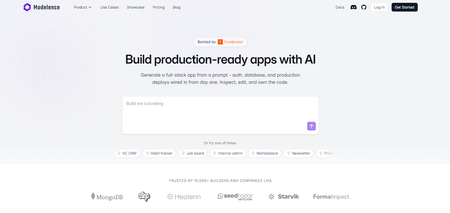
Modelence is an AI full-stack builder for web apps with backend, deployment, and monitoring included.
Key features:
- Built-in database and authentication
- Background jobs and monitoring
- Exportable source code
Reason why: It offers deeper customization, backend control, and code ownership than Softr.
Ease of use and setup: Prompt-based building keeps setup simple, with direct code editing available.
User sentiment and ratings: G2 currently lists 1 validated review, so public sentiment is still limited.
Limitations: Its ecosystem and review base are smaller than more established platforms.
Pricing: Free includes $5 of App Builder usage; Starter is $20/month with $20 included. Extra usage is metered.
Ownership and lock-in: You can export the code, run it locally, or host it elsewhere.
Migration from Softr: Moderate effort; rebuild the user interface (UI) and workflows while reconnecting or migrating existing data.
2. Zite
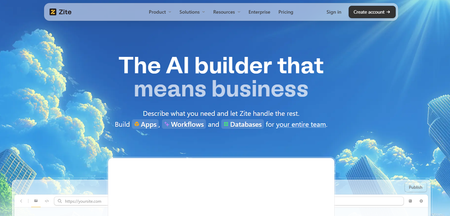
Zite is an AI no-code builder for portals, dashboards, customer relationship management systems (CRMs), and internal tools with a built-in database and workflows.
Key features:
- Built-in database and permissions
- Visual workflows and AI generation
- Airtable and Google Sheets integrations
Reason why: Unlimited app users avoid Softr’s user-based scaling pressure.
Ease of use and setup: Familiar for Softr users, with prompt-based building and visual editing.
User sentiment and ratings: Zite has 4.5/5 from 1 G2 review, so public sentiment is still limited.
Limitations: Apps remain hosted on Zite and cannot currently be self-hosted independently.
Pricing: Free; Pro is $19/month or $15/month annually with 100 AI credits. The pricing details were verified in August 2026.
Ownership and lock-in: Data can be exported, but the app itself remains tied to Zite.
Migration from Softr: Low to moderate effort; rebuild pages and workflows while keeping supported external data sources connected.
3. Glide
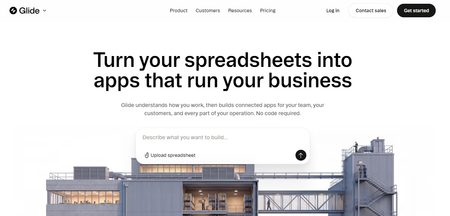
Glide is a no-code builder for data-driven business apps, portals, and internal tools.
Key features:
- Built-in and external data sources
- Workflows and permissions
- AI-assisted building
Reason why: It offers a fast visual workflow and plans for larger user bases.
Ease of use and setup: Similar to Softr, with a spreadsheet-style data model and visual builder.
User sentiment and ratings: Glide has 4.7/5 from 808 G2 reviews, with ease of use and fast app creation recurring strengths.
Limitations: Business pricing scales with users and updates, and source-code export is unavailable.
Pricing: Free; Explorer is $25/month or $19/month annually. Business starts at $199/month annually with 30 users, then $5 per additional user. The pricing details were verified in August 2026.
Ownership and lock-in: External data can remain outside Glide, but the app itself cannot be exported as source code.
Migration from Softr: Low to moderate; rebuild the interface and workflows while reconnecting supported data sources.
4. Stacker
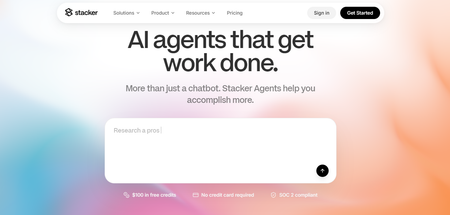
Stacker is an AI-powered portal builder for customer, partner, and internal business apps.
Key features:
- AI-generated portals
- Permissions and authentication
- External data syncing
Reason why: It is purpose-built for portals and supports direct connections to common business data sources.
Ease of use and setup: Softr users can build conversationally rather than configuring pages block by block.
User sentiment and ratings: Stacker has 4.5/5 from 11 G2 reviews, with users liking its usability and Airtable integration.
Limitations: Portal plans cap customer counts, so growing audiences may still require upgrades.
Pricing: Standard is $50/month with 250 credits; Enterprise uses custom pricing. The pricing details were verified in August 2026.
Ownership and lock-in: External data can stay synced, but current documentation does not advertise standalone portal export or self-hosting.
Migration from Softr: Low to moderate; rebuild the portal while keeping supported external data sources connected.
5. WeWeb
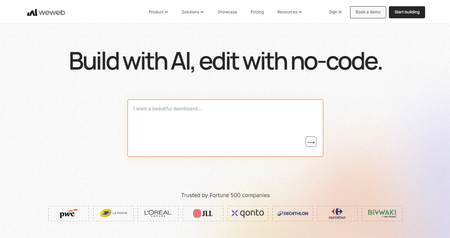
WeWeb is a visual web app builder that can use its own backend or connect to external databases and APIs.
Key features:
- Visual UI and workflows
- External backend support
- Vue.js code export
Reason why: Pricing is per builder seat, not end user, while paid plans include code export and self-hosting.
Ease of use and setup: More technical than Softr, especially when managing a separate backend.
User sentiment and ratings: WeWeb has 4.9/5 from 24 G2 reviews, with flexibility and ease of use commonly cited.
Limitations: Backend architecture and integrations require more setup than Softr’s all-in-one workflow.
Pricing: Free to build; paid plans start at $20/month per builder seat with unlimited end users. The pricing details were verified in August 2026.
Ownership and lock-in: Paid plans include Vue.js code export and self-hosting, while data can remain in your own backend.
Migration from Softr: Moderate; rebuild the frontend and workflows while retaining compatible external data sources.
6. Knack
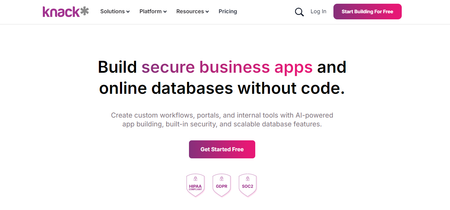
Knack is a no-code database and web app builder for portals, workflows, and custom business apps.
Key features:
- Relational database
- Unlimited app users
- Workflows and API integrations
Reason why: Unlimited users remove Softr’s user-based scaling pressure.
Ease of use and setup: More database-oriented than Softr, but still fully no-code.
User sentiment and ratings: Rated 4.3/5 from 114 G2 reviews, with ease of use and flexibility recurring strengths.
Limitations: Starter caps storage at 20,000 records and three apps; scheduled tasks require Pro.
Pricing: Starter is $59/month or $49/month annually; pricing is not per user. The pricing details were verified in August 2026.
Ownership and lock-in: You own the data and can export comma-separated values (CSV), JavaScript Object Notation (JSON), or text format (TXT), but the app remains on Knack.
Migration from Softr: Moderate; rebuild the interface and workflows, then import existing data.
7. Adalo
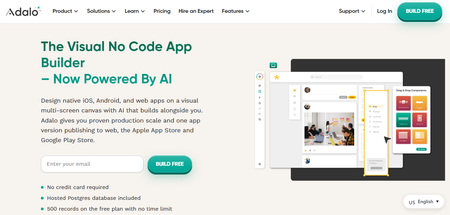
Adalo is a visual no-code builder for web and native iOS and Android apps.
Key features:
- Built-in PostgreSQL database
- Native app publishing
- API integrations and custom actions
Reason why: Flat pricing and native mobile publishing avoid Softr’s per-user scaling model.
Ease of use and setup: Visual building is approachable for Softr users, especially for simple apps.
User sentiment and ratings: Rated 4.4/5 from 7 G2 reviews, with ease of use and fast minimum viable product (MVP) development commonly mentioned.
Limitations: Source code cannot be exported, and complex apps may outgrow the visual tooling.
Pricing: Free; Starter is $36/month billed annually, while Professional is $52/month. No usage or token fees apply. The pricing details were verified in August 2026.
Ownership and lock-in: You own the app intellectual property (IP) and can export data, but not editable source code.
Migration from Softr: Moderate; screens and workflows need rebuilding, while existing data can be imported or reconnected.
8. Noloco
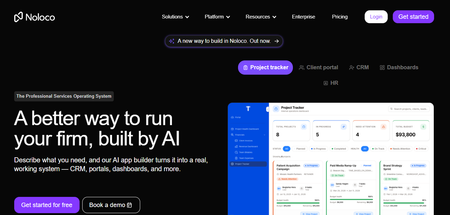
Noloco is a no-code platform for client portals, internal tools, and business workflows using built-in or external data.
Key features:
- Client and team permissions
- Built-in workflows
- Airtable, Structured Query Language (SQL), and other integrations
Reason why: It offers deeper permissions and workflow controls for client-facing operational apps.
Ease of use and setup: Similar to Softr, with quick setup from existing data sources.
User sentiment and ratings: Rated 4.8/5 from 36 G2 reviews, with ease of use and customer support frequently cited.
Limitations: Pricing still rises with active users, data rows, and workflow usage.
Pricing: Free; Build is $79/month, while Enterprise uses custom pricing. The pricing details were verified in August 2026.
Ownership and lock-in: Data can be exported as CSV, but the app itself remains on Noloco.
Migration from Softr: Low to moderate; rebuild pages and workflows while retaining supported external data sources.
9. Jotform Apps
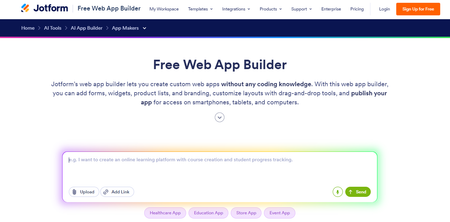
Jotform Apps is a no-code builder for form-driven portals, directories, and lightweight progressive web apps (PWAs).
Key features:
- Drag-and-drop app builder
- Forms and workflows
- Payments and integrations
Reason why: It fits form-heavy apps where pricing is based on submissions and usage rather than Softr-style app-user tiers.
Ease of use and setup: Similar to Softr in simplicity, especially for existing Jotform users.
User sentiment and ratings: Rated 4.7/5 from 603 G2 reviews, with ease of use and setup commonly cited.
Limitations: Apps are PWAs and cannot be published directly to Apple’s App Store or Google Play.
Pricing: Free; Bronze is $34/month billed annually, with limits on submissions, views, and storage. The pricing details were verified in August 2026.
Ownership and lock-in: Submission data is exportable, but the Jotform App itself remains platform-dependent.
Migration from Softr: Low to moderate; rebuild pages and workflows, then import or reconnect the underlying data.
10. DronaHQ
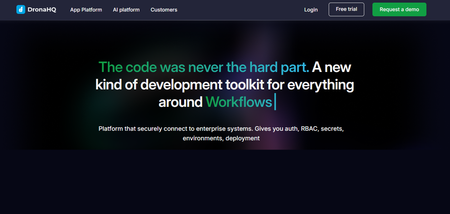
DronaHQ is a low-code platform for internal tools, portals, dashboards, and workflows connected to databases and APIs.
Key features:
- Database and API connectors
- Server-side automations
- Web, mobile, and embedded apps
Reason why: It offers deeper logic, integrations, and self-hosting options than Softr.
Ease of use and setup: More technical than Softr, especially for custom queries and logic.
User sentiment and ratings: Rated 4.4/5 from 39 G2 reviews, with flexibility, ease of use, and support recurring strengths.
Limitations: Pricing is still per user, and advanced controls sit on higher plans.
Pricing: Starter is $10/user/month annually or $12 monthly; Business is $25/user/month annually or $28 monthly. The pricing details were verified in August 2026.
Ownership and lock-in: Data can stay in external systems or be exported; self-hosting is available, but app exports use DronaHQ’s format.
Migration from Softr: Moderate; rebuild the UI and workflows while reconnecting existing databases and APIs.
11. Bubble
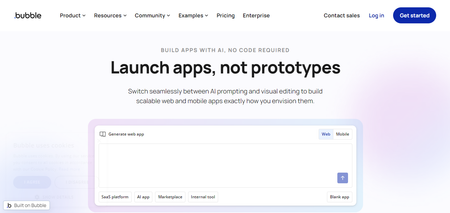
Bubble is a visual no-code platform for building custom web apps with its own database, workflows, and hosting.
Key features:
- Built-in database and permissions
- Backend workflows and APIs
- Deep visual customization
Reason why: It offers more application logic and customization than Softr without pricing primarily by end user.
Ease of use and setup: More flexible than Softr, but with a steeper learning curve.
User sentiment and ratings: Rated 4.4/5 from 166 G2 reviews, with flexibility and fast development recurring strengths.
Limitations: Workload-based pricing can become harder to forecast as app activity grows.
Pricing: Free; Web Starter is $29/month billed annually or $32 monthly, with workload usage metered. The pricing details were verified in August 2026.
Ownership and lock-in: Data is exportable, but Bubble apps cannot be exported as source code or self-hosted.
Migration from Softr: Moderate to high effort; rebuild the UI, permissions, and workflows, then import or reconnect existing data.
How Complex Is It to Switch From Softr?
Switching from Softr usually means rebuilding the app layer.
Data can often stay in Airtable, Supabase, SQL, or another external source, but pages, permissions, workflows, and integrations need to be recreated.
Simple portals are relatively straightforward to move. Apps with custom permissions, automations, or many integrations take more planning and testing.
The biggest variable is how much of your current setup depends on Softr-specific logic rather than portable data and external services.
Which Softr Alternative Should You Choose?
Choose based on the problem you are trying to solve, not the longest feature list.
| If You Are Leaving Softr Because | Start by Looking At |
|---|---|
| Your bill jumped after a user limit | Flat-rate or per-editor pricing like Retool, Budibase, or Knack |
| Your customer audience is growing | Platforms that do not primarily charge per app user |
| You manage client portals | Stacker, Noloco, or a more self-owned stack |
| You pay for Softr plus Airtable | Platforms with a built-in database |
| You need background or scheduled jobs | Platforms with a server-side backend |
| Softr feels too restrictive | Bubble, Retool, or deeper-customization tools |
| Your portal is becoming a full product | Modelence or another full-stack platform |
| Softr works but costs too much | Optimize the current setup before switching |
The best choice is the one that removes your current Softr constraint without creating a bigger one elsewhere.
Summing It Up
There is no single best Softr alternative. The right choice depends on what is pushing you away from Softr, whether that is user-based pricing, limited customization, data ownership, or backend requirements.
For full-stack apps with stronger code ownership and backend control, Modelence is a practical option. For portals and internal tools, platforms like Glide, Noloco, or Stacker may be a closer fit.
If you are rebuilding beyond Softr’s portal model, you can try Modelence for free.
Frequently asked questions (FAQs)
What is the best Softr alternative?
It depends on your needs, with Modelence strong for full-stack apps, Glide for business tools, and Noloco for portals.
Why is Softr so expensive as you add users?
Costs can rise when user limits or advanced features push you into higher plans.
Is there a free Softr alternative?
Yes, options such as Modelence, Zite, Glide, Adalo, and WeWeb offer free plans.
What is the best Softr alternative for client portals?
Noloco, Stacker, and Glide are strong options for client-facing portals.
Does Softr still require Airtable?
No, Softr has its own database and also supports external data sources.
Can you export your app or data from Softr?
You can export data, but not the Softr app as standalone source code.
Which Softr alternative doesn't charge per user?
WeWeb and Knack are examples of alternatives that do not primarily price by end user.
Is Softr good for building a real product, or just portals?
Softr works best for portals and business apps, while more complex products may need deeper customization.
Softr vs Noloco vs Glide, which should you pick?
Choose Softr for simplicity, Noloco for portal workflows, and Glide for data-driven business apps.
Related articles