TL;DR
Key takeaways
- Bubble’s biggest tradeoffs are workload-based costs and lack of source-code export.
- Switching from Bubble usually means rebuilding the app rather than directly migrating it.
- Visual builders offer the closest workflow, while AI code builders provide greater portability.
- Backend control, scalability, technical level, and ownership should drive your platform choice.
- Modelence is a strong fit for teams prioritizing full-stack development and code ownership.
Ask AI about this post:
If you already have a Bubble app running or half-built, switching platforms is not a simple migration.
Bubble does not export source code, so moving to another platform usually means rebuilding the application rather than transferring it.
This guide compares 10 Bubble alternatives based on the reasons builders actually leave, including pricing, scalability, backend control, and code ownership.
It also looks at what each option costs to move to, so you can choose a replacement that fits both your product and your reason for leaving Bubble.
Why Builders Look for a Bubble Alternative
Builders usually consider Bubble.io competitors when costs become harder to forecast, they need code ownership, or the app becomes harder to maintain as it grows.
Workload Units Make Cost Hard to Forecast
Bubble measures server-side activity in workload units (WUs), including database queries, workflows, and application programming interface (API) calls.
Paid plans include a monthly allowance, while extra usage can trigger overage charges. The challenge is predicting WU consumption before traffic and app activity are stable.
No Source-Code Export
Bubble apps cannot be exported as application source code. Data can move, but switching platforms generally requires rebuilding the user interface (UI) and logic.
This keeps development tied to Bubble unless you rebuild elsewhere.
The Learning Curve Is Steeper Than “No-Code” Implies
Bubble removes traditional coding but still requires builders to understand data types, privacy rules, states, workflows, and backend logic.
That depth makes it powerful, but the learning curve can be longer than newcomers expect.
Performance and Complexity Ceilings
Large datasets, complex searches, and growing workflow logic can increase both response times and WU consumption.
As apps scale, optimizing performance and controlling workload costs increasingly become the same task.
Plugin Dependency
Third-party plugins add functionality but can introduce:
- Extra subscription costs
- Maintenance dependencies
- Compatibility risks
A critical plugin that stops being maintained may require replacement or rework.
The Three Routes Out of Bubble
Bubble alternatives generally differ in how much of the stack you want to control.
Keeping the Visual Builder Style
Platforms such as FlutterFlow and Adalo preserve drag-and-drop development and a shorter learning curve. The tradeoff is continued reliance on another managed runtime.
Taking Control of the Backend
Tools such as WeWeb let you keep a visual frontend while connecting your own database, APIs, or backend. You gain more infrastructure control but also more setup and maintenance.
Keeping the Code Ownership
AI code builders generate conventional source code that can be version-controlled and deployed elsewhere. Portability improves, but your team takes on more responsibility for architecture, security, testing, and infrastructure.
How We Evaluated These Bubble Alternatives
We compared each platform on five factors:
- Costs: Subscriptions, usage fees, overages, and add-ons.
- Ownership: Code export, data access, and self-hosting.
- Scaling: How well the platform fits growing apps.
- Technical level: Skills required to build and maintain it.
- Production readiness: Deployment, monitoring, debugging, and scheduled work.
There is no single best Bubble alternative. The right fit depends on why you are leaving and what your app needs next.
The 10 Best Bubble Alternatives
The best alternatives to Bubble fall into different categories: visual builders, platforms that separate the frontend from the backend, and AI tools that give you a conventional codebase.
The table below gives a quick view before we compare each option in detail.
| Platform | Best For | Pricing | Strengths | Weaknesses | Technical Level |
|---|---|---|---|---|---|
| FlutterFlow | Mobile and cross-platform apps | Free; Basic $39/mo | Code export, native apps, visual logic | More backend setup | Low-code |
| Adalo | No-code mobile apps | Free; Starter $36/mo (annually) | Simple visual builder, native publishing | Less control for complex logic | No-code |
| Modelence | Production full-stack web apps | Free; Starter $20/mo | Code ownership, backend, deployment, observability | Smaller ecosystem | Semi-technical |
| Glide | Data-driven business apps | Free; Solo $25/mo | Fast setup, built-in database | Focused mainly on business apps | No-code |
| Softr | Portals and internal tools | Free; Basic $25/mo or $19/mo (annually) | Easy setup, data integrations | Less flexible for complex logic | No-code |
| WeWeb | Visual frontend with backend control | Free; Essential $20/mo | Code export, GitHub, backend flexibility | Backend managed separately | Low-code |
| Retool | Internal tools and admin apps | Free; Team $10/builder/mo + $5/internal user/mo (annually) | Strong integrations and workflows | Primarily built for internal software | Low-code |
| Lovable | Rapid AI-built minimum viable products (MVPs) | Free; Pro $25/mo | Fast full-stack generation, Git sync | Credit-based AI usage | Low-code |
| Replit | Developer-led AI app building | Free; Core $25/mo or $20/mo (annually) | Full integrated development environment (IDE), backend, deployment | More technical responsibility | Developer-friendly |
| Base44 | Prompt-built full-stack apps | Free; Starter $20/mo or $16/mo (annually) | Integrated backend, simple AI workflow | Credit-based usage | Low-code |
The pricing details above were verified in August 2026.
1. FlutterFlow
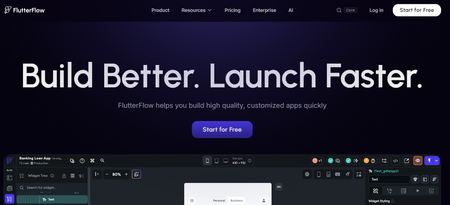
FlutterFlow is a visual low-code builder for mobile, web, and desktop Flutter apps, with source-code export on paid plans.
Key features:
- Flutter source-code export
- API and data integrations
- Native app-store deployment
Why it’s a good Bubble alternative: Code export and native mobile support reduce Bubble’s platform lock-in.
Ease of use and setup: Visual building is approachable, but advanced logic may require Flutter or Dart knowledge.
What users like: G2 reviewers often mention fast development, ease of use, and code flexibility.
Limitations: Complex logic and backend setup can require more technical work.
Pricing: Free; Basic is $39/month and includes code download and app-store deployment. The pricing details were verified in August 2026.
Ownership and lock-in: Basic+ lets you export the Flutter source code and continue development elsewhere.
2. Adalo
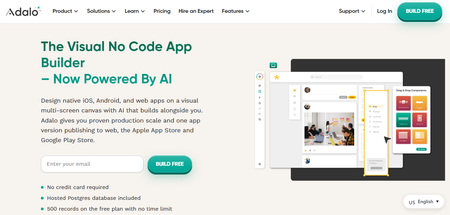
Adalo is a visual no-code builder for database-driven web and native iOS/Android apps.
Key features:
- Built-in PostgreSQL database
- Native iOS and Android publishing
- API integrations and custom actions
Why it’s a good Bubble alternative: Native publishing and flat pricing avoid Bubble’s WU-based billing.
Ease of use and setup: Easier than Bubble for straightforward mobile apps, but less flexible for complex logic.
What users like: G2 reviewers often mention ease of use and fast MVP development.
Limitations: Source-code export is unavailable, and complex apps may outgrow the visual tooling.
Pricing: Free; Starter is $36/month billed annually, with no usage or token charges. The pricing details were verified in August 2026.
Ownership and lock-in: You own the app intellectual property (IP) and can export data, but not editable source code.
3. Modelence
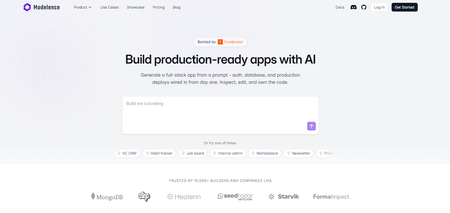
Modelence is an AI full-stack builder that generates TypeScript, React, and MongoDB apps with backend, deployment, and monitoring included.
Key features:
- Built-in auth and database
- Background jobs and monitoring
- Exportable source code
Why it’s a good Bubble alternative: Its open-source framework provides a conventional codebase instead of a proprietary runtime.
Ease of use and setup: Prompt-based building handles initial setup, while developers can edit the generated code directly.
What users like: Product Hunt feedback favors having frontend, backend, and database development in one workflow.
Limitations: Its ecosystem and public review base are smaller than more established platforms.
Pricing: Free includes $5 of App Builder usage; Starter is $20/month with $20 included. Extra usage is metered. The pricing details were verified in August 2026.
Ownership and lock-in: Code can be exported to GitHub, run locally, or hosted elsewhere.
4. Glide
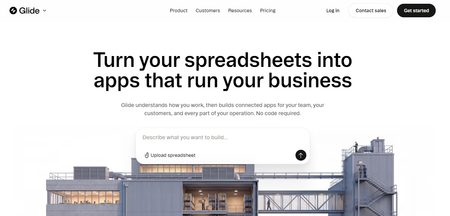
Glide is an AI app builder focused on internal business software, with a built-in database and collaborative workspace.
Key features:
- AI-assisted app generation
- Built-in database
- Team collaboration
Why it’s a good Bubble alternative: It simplifies data-driven internal apps without complex Bubble workflows.
Ease of use and setup: Easier than Bubble for straightforward business apps.
What users like: G2 reviewers often cite Glide’s ease of use and fast app creation.
Limitations: Less suited to highly customized consumer products.
Pricing: Free; Solo is $25/month with credit-based AI usage. The pricing details were verified in August 2026.
Ownership and lock-in: Glide is managed and does not offer conventional source-code export.
5. Softr
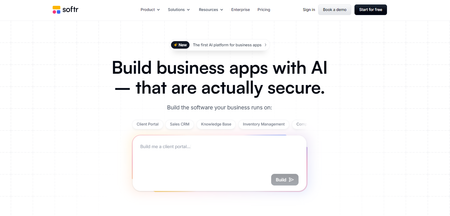
Softr is a no-code builder for portals, internal tools, customer relationship management (CRM) systems, and other business apps using built-in or external data.
Key features:
- Built-in and external databases
- User roles and permissions
- Native workflows
Why it’s a good Bubble alternative: It offers a simpler, predictable workflow for business apps without WU billing.
Ease of use and setup: Easier than Bubble for portals and internal tools.
What users like: G2 reviewers frequently mention quick setup, ease of use, and strong integrations.
Limitations: Custom logic and developer-level control are more limited than code-based tools.
Pricing: Free; Basic is $25/month or $19/month annually; Pro is $119/month or $99/month annually. Plans include limits on AI credits, workflow actions, records, and users.
The pricing details were verified in August 2026.
Ownership and lock-in: Data can live externally, but Softr apps cannot be exported as source code.
6. WeWeb
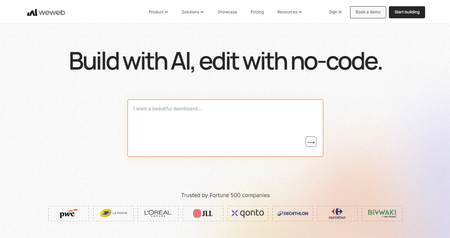
WeWeb is a visual web app builder with a native backend or connections to services such as Supabase, Xano, and APIs.
Key features:
- Visual workflows and UI
- Native or external backends
- Vue.js code export
Why it’s a good Bubble alternative: It provides greater infrastructure control and a clear self-hosting path.
Ease of use and setup: More technical than Bubble when using external backends.
What users like: WeWeb community users value its frontend flexibility and ability to pair with custom backends.
Limitations: Some WeWeb-dependent integrations may not work fully when self-hosted.
Pricing: Free; Essential starts at $20/month per builder seat, with no per-end-user fees. The pricing details were verified in August 2026.
Ownership and lock-in: Paid plans can export the Vue.js frontend and self-host it outside WeWeb.
7. Retool
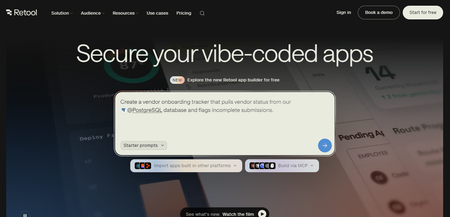
Retool is a low-code platform for internal tools, dashboards, workflows, and admin apps connected to existing data and APIs.
Key features:
- Database and API connectors
- Web and mobile apps
- Automated workflows
Why it’s a good Bubble alternative: It is better suited to internal apps that need direct access to business data.
Ease of use and setup: Faster than Bubble for standard internal tools, but custom queries benefit from technical skills.
What users like: A Reddit discussion values Retool’s governance and autonomy for non-engineering teams.
Limitations: It is primarily designed for internal software rather than consumer-facing apps.
Pricing: Free; Team is $10/builder/month + $5/internal user/month billed annually, with additional AI credits available.
The pricing details were verified in August 2026.
Ownership and lock-in: Your data can remain in external systems, but Retool apps stay tied to the Retool platform.
8. Lovable
Lovable is an AI builder that turns prompts into full-stack web apps with managed cloud services and editable code.
Key features:
- AI full-stack generation
- Built-in backend and hosting
- GitHub and GitLab sync
Why it’s a good Bubble alternative: It provides a conventional codebase that can leave the platform.
Ease of use and setup: Faster to start than Bubble, though complex debugging can require technical input.
What users like: G2 reviewers frequently mention its intuitive interface and speed from idea to working app.
Limitations: Building and app usage consume credits, so costs vary with activity.
Pricing: Free; Pro starts at $25/month, with usage managed through credits. The pricing details were verified in August 2026.
Ownership and lock-in: You own the code and can sync to GitHub, self-host, or deploy elsewhere.
9. Replit
Replit combines an AI Agent, browser-based IDE, database, and deployment tools for building full-stack apps.
Key features:
- AI Agent
- Built-in database and deployment
- GitHub integration
Why it’s a good Bubble alternative: It gives developers direct access to a conventional codebase and development environment.
Ease of use and setup: More technical than Bubble, but AI handles much of the initial coding and setup.
What users like: In a Reddit discussion, users liked Replit’s file access and fast AI-assisted iteration.
Limitations: AI costs vary with task complexity, making usage harder to predict.
Pricing: Free; Core is $25/month or $20/month billed annually and includes $25 in monthly credits. The pricing details were verified in August 2026.
Ownership and lock-in: Source code can be exported or managed through GitHub, but hosted services require migration if you leave.
10. Base44
Base44 is a prompt-based full-stack app builder with managed database, authentication, backend functions, and hosting.
Key features:
- Built-in database and authentication
- Backend functions and integrations
- GitHub sync on Builder+
Why it’s a good Bubble alternative: It offers a simpler prompt-first workflow with access to the generated code.
Ease of use and setup: Easier to start than Bubble for simple apps because much of the structure is generated from prompts.
What users like: Product Hunt reviewers often mention fast prototyping, ease of use, and the all-in-one backend.
Limitations: Credit limits and platform lock-in are common concerns in user feedback.
Pricing: Free; Starter is $20/month or $16/month annually. Builder is $50/month or $40/month annually and adds GitHub integration. Usage is credit-based.
The pricing details were verified in August 2026.
Ownership and lock-in: Builder+ supports GitHub sync and local development, but apps can still depend on Base44 backend services.
How to Choose the Right Bubble Alternative
Choose based on the problem you are trying to solve:
- Want a familiar visual workflow? Consider FlutterFlow or Adalo.
- Need backend control? Look at WeWeb.
- Want code ownership? Consider Modelence, Lovable, or Replit.
- Building native mobile apps? Prioritize FlutterFlow or Adalo.
Existing Bubble apps usually require rebuilding rather than direct migration, so factor that effort into the decision.
Leaving Bubble Isn’t Free: The Migration Costs to Consider
A Bubble migration usually means recreating the app while moving any portable data and external services.
Common costs include:
- Rebuilding workflows and scheduled jobs
- Migrating authentication
- Reconnecting APIs and integrations
- Running both systems during cutover
- Retesting data, permissions, and logic
One 2026 agency benchmark estimates roughly 2 weeks for simple apps, 3–5 weeks for standard software as a service (SaaS), and 6–8 weeks for more complex platforms.
The tradeoff is upfront rebuild effort in exchange for greater ownership and portability.
Summing It Up
Visual builders such as FlutterFlow and Adalo preserve a familiar workflow, while WeWeb offers more backend control and AI code builders provide greater portability.
If full-stack development and code ownership are priorities, Modelence is a practical option for new builds or Bubble rebuilds. Start for free.
Frequently asked questions (FAQs)
What is the best Bubble alternative?
It depends on your needs, with Modelence strong for full-stack code ownership, FlutterFlow for mobile, and WeWeb for backend flexibility.
Can you export your code from Bubble?
No, Bubble does not provide source-code export.
Is there a free alternative to Bubble?
Yes, several alternatives offer free plans, including Modelence, FlutterFlow, Adalo, Lovable, Replit, and Base44.
Why is Bubble so expensive at scale?
Costs can rise as server-side activity consumes more WUs.
What are workload units in Bubble, and how do they affect cost?
WUs measure server-side resource use and can trigger overage charges.
How hard is it to migrate a Bubble app to another platform?
Usually difficult, because the app must be rebuilt rather than directly exported.
What's the best Bubble alternative for a marketplace or SaaS product?
Modelence is a strong option when full-stack development and code ownership matter.
Is Bubble still worth using in 2026?
Yes, if you value visual development and are comfortable with its pricing model and platform lock-in.
Which Bubble alternative lets you own your code?
Modelence, FlutterFlow, Lovable, Replit, and WeWeb all provide stronger code ownership options.
Related articles