
I've always found expense tracking a chore - apps felt more confusing than helpful. That frustration sparked an idea: what if managing money was as easy as chatting with a friend?
That's how FinChat was born - an AI-powered tool that lets you log expenses and track spending through natural conversation. At the Modelence Hackathon, this idea earned me 2nd place - and showed me how powerful the right platform can be.
How FinChat works
Forget forms and rigid workflows. Just type:
- "How much have I spent?" → FinChat replies in the chat with your total, while the dashboard gives a clear breakdown by category
- "₹500 pizza" → instantly logged under Food and added to your dashboard
Behind the scenes, it auto-categorizes, timestamps, and gives you real-time breakdowns - all with a modern UI.
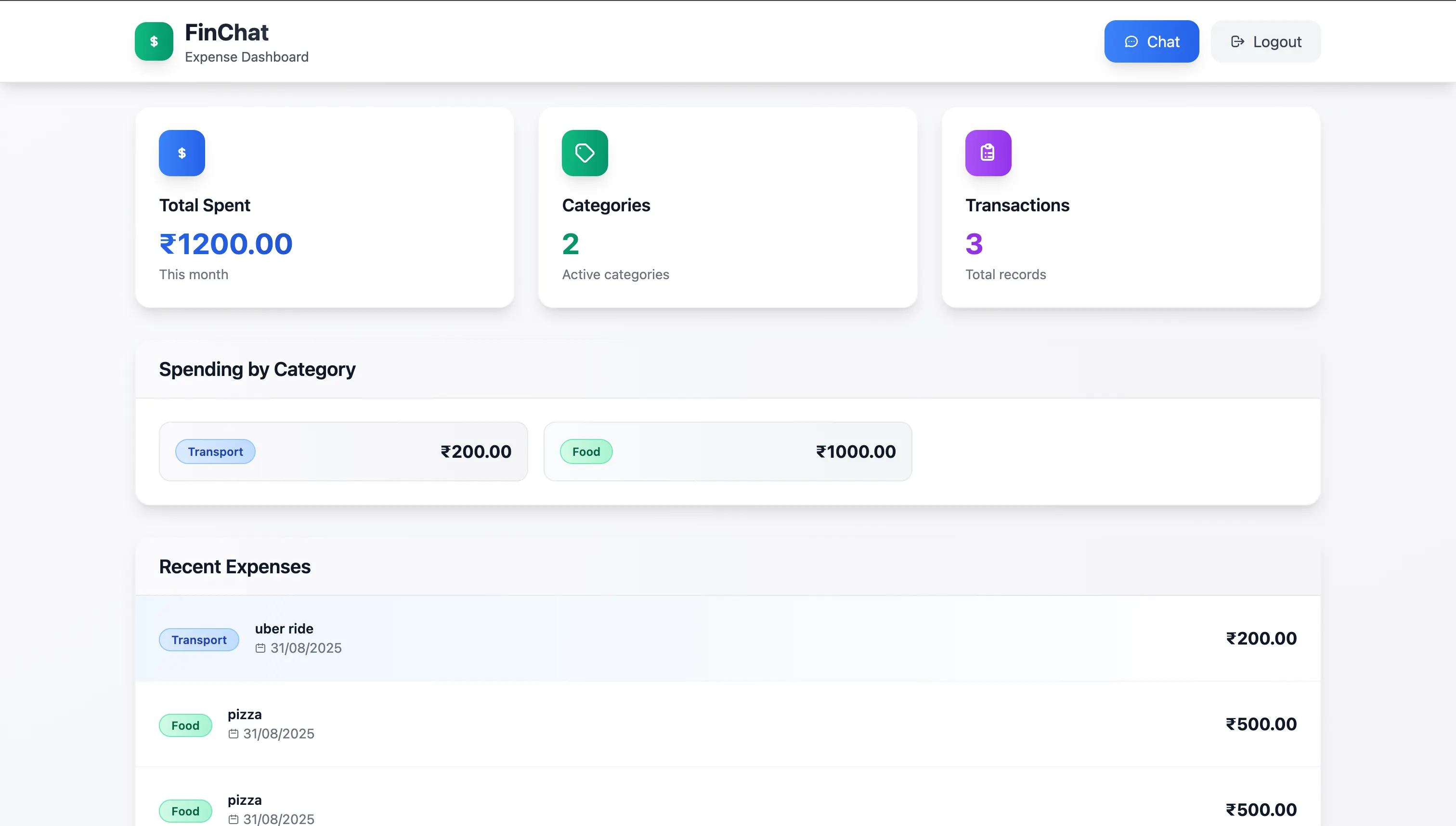
Most finance tools demand you fit into their rigid systems, inputting data manually or decoding cryptic reports. FinChat flips that. Tell it "₹500 pizza" or ask "How much have I spent?" and it handles the rest - recording expenses, categorizing them (like Food or Transport), and even offering a breakdown on a sleek dashboard. It's designed for real life, where budgets evolve with every coffee or cab ride.
Why Modelence made it possible
What made FinChat more than just an idea was Modelence. It's a full-stack TypeScript framework designed for building AI apps fast.
- Type-safe & production-ready - Less debugging, more building.
- Full-stack scaffolding - React + Tailwind frontend, MongoDB backend, auth and observability - all out of the box.
- Seamless AI integration - GPT parsing was just a few lines of code.
Instead of wrestling with setup, I could focus on the experience - making money management feel human.
Try it yourself
FinChat is open-source: GitHub Repo.
And if you're building your own AI-powered app, check out Modelence - it gave me the speed, structure, and confidence to ship FinChat in record time.
Frequently asked questions (FAQs)
What is Modelence?
Modelence is a production cloud platform where you can run your whole infrastructure - backend, cron jobs, and built-in monitoring for your app. Unlike traditional cloud platforms, Modelence is built ground up to be operated by agents, so you can run production-grade apps without being on-call.
How does Modelence fit with Vercel and Supabase?
Many teams start with frontend on Vercel and database on Supabase, but ultimately need a full backend as they scale. Vercel functions and Supabase edge functions can't hold a persistent process, so anything long-running like agents or websockets needs a separate backend, background jobs, and additional databases or caches. Modelence provides all of these and runs your infrastructure in one place.
How is Modelence different from Railway or Render?
Platforms like Railway and Render give you a place to deploy services and databases, and from there the operating is on you: you set up the alerts, you notice when a cron job stops firing or act when a process crashes. Modelence takes over that part. It watches your processes and requests, detects when something goes wrong, and acts as your SRE, on-call 24/7, who takes action to keep your app running instead of delegating it to you.
Does Modelence scale for production apps?
Modelence handles all aspects that make your app enterprise-grade: automatic backups, failover, auto-scaling and monitoring. When something goes wrong while you're away, Modelence acts as your first responder instead of just letting you know and waiting.